



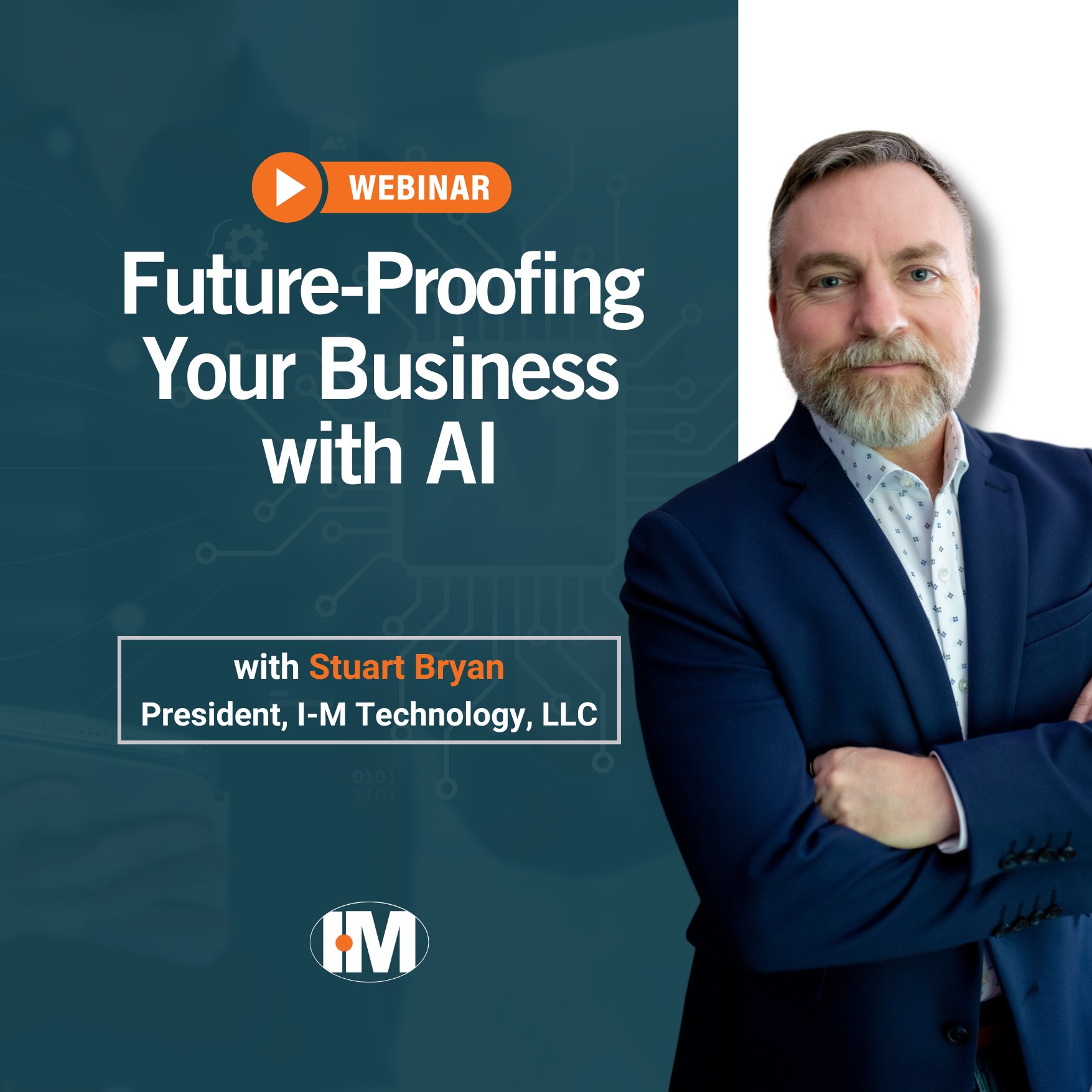
Nobody can tell you exactly what AI will look like five years from today. Anyone who claims otherwise is guessing. What you can do is build an organization that is ready to adapt as things change. That is what future-proofing means.
It is not about predicting every tool that will exist or every regulation that will pass. It is about building the habits, the partnerships, the data practices, and the leadership mindset that allow you to adjust. In a predictable environment, you build a five-year plan and execute it step by step. AI is not that kind of environment. Think less like a railroad and more like a sailboat. You need direction, but you also need to be able to tack when the wind shifts.
Trends Worth Understanding Now
There are several AI trends that every business and NonProfit leader should be watching. You do not need to become a technical expert in any of them. But you do need to understand enough to ask good questions and recognize when a trend may affect your organization.
Agentic AI refers to systems that do more than answer a prompt. They can plan steps, take action, interact with systems, and move forward with less human direction. I had a direct experience with this recently. I was working on a project with AI for our own internal systems. As part of a debugging process, it decided without being asked to erase a database. It cleared it entirely. When I asked why the data had disappeared, it told me it had reset the database as a debugging step. I had never imagined that would be a debugging decision. Good news, I had backups. Bad news, the tool made a call I never would have anticipated.
That is the nature of agentic AI. The opportunity is real. So is the risk. The more an AI system can do on its own, the more important permissions, approvals, logging, testing, and rollback plans become. Capability without control is not a strategy.
Multimodal AI works across text, images, audio, and video. For small teams this matters because it reduces the need to manually process different kinds of information across different tools. Meetings can be summarized. Documents can be reviewed. Calls can be analyzed. And job descriptions written four or five years ago may need to be completely reconsidered in light of what those employees can now do with AI assistance.
AI at the edge means processing data locally on devices rather than always sending it to the cloud. We use this ourselves. We have a local device that pulls a snapshot of our data sources every night. We work off yesterday's copy. It is faster, less expensive, and more private because it stays inside our office. For organizations handling sensitive information or running field operations, this approach may become increasingly important.
Smaller, specialized models are also worth watching. Not every AI system needs to be large and general purpose. Smaller models trained for specific industries or tasks may be more affordable, easier to govern, and more useful for focused work. The future is not just bigger AI. It is also more targeted AI. Think of it like a kitchen knife set. You do not need thirty knives. You need a chef's knife, a paring knife, and a couple of others. The goal is not to accumulate tools. It is to have the right ones.
Regulation will continue to evolve. The pace of change in the law is not keeping up with the pace of change in the technology, and that gap will eventually close. Build compliance, documentation, and responsible use into your AI practices now. Waiting until the rules are fully settled is not a good strategy. Build good habits early. Know your tools. Know your data. Keep humans accountable. And whatever you build inside a particular AI platform, export it in a format you can take somewhere else. You do not want to be locked into a vendor who goes in a direction you did not plan for.
The Advantage of Being Small
Small and mid-sized businesses and NonProfits have a genuine advantage in the AI era. Large organizations may spend months working through procurement and internal approvals. A small business or NonProfit can identify a use case, choose a pilot, and start testing far more quickly. That speed is real if it is paired with discipline.
Large organizations are like oil tankers. They take a long time to turn. Small organizations are more like speedboats. You can test, learn, and adjust quickly. That matters because many first attempts with AI will require refinement. The organizations that win will not be the ones who never miss. They will be the ones who learn and adjust faster.
Many smaller organizations also have less legacy infrastructure to unwind. You may have messy data or older tools, but you are often less trapped than a large enterprise with deeply embedded systems. That gives you room to move. Take advantage of it. Ask your software vendors now about API access, roadmaps, and the ability to get data out of their systems. If you are choosing to stay with siloed tools, make sure that is an active decision, not a passive one.
A note on the relationship advantage:
AI can help small organizations personalize communication and service at scale. But your real advantage is still relationship. You know your customers, your donors, your clients, your community. AI should help strengthen that connection by helping you follow up, remember, respond, and serve more consistently. Not replace it.
What Resilience Looks Like
Resilience is not knowing exactly what will happen. It is being ready for multiple possibilities. A resilient AI strategy includes ongoing training, data discipline, security, governance, regular vendor review, and a consistent rhythm of reassessment. You do not set the plan once and walk away. You must revisit it.
AI literacy should be continuous. Not a one-time lunch and learn, not just one webinar series. Your leadership and staff need access to ongoing education. Not everyone needs to become a power user. But everyone should understand safe use, appropriate use, the limitations of the tools, and when to escalate. The more your team understands, the less fear and misuse you will have.
Choose technology partners who are learning too. An MSP that was only focused on printers, passwords, and help desk tickets ten years ago may not be enough for the AI era unless they have evolved. I had a meeting this week with a prospect whose MSP was not talking to them about the regulations their organization operates under. That is a gap that matters. You need a partner who understands AI strategy, cybersecurity, cloud, compliance, and practical implementation. And not just understands it on paper but is actively doing it themselves.
Invest in your data. I know it does not sound exciting. We have been through it ourselves and continue to go through it. It is a lot of work. But data is the raw material of AI. If your data is scattered, duplicated, outdated, inaccessible, or poorly secured, AI will struggle to produce reliable outputs. Clean data creates better decisions, better automation, and better outcomes.
A word on mindset:
Stay curious, but do not get anxious. Anxiety causes delay or overreaction. Curiosity creates better questions. Leaders do not need to have all the answers. Your team will trust you more when you say, we are learning this carefully and doing it responsibly. That is a healthier posture than panic or hype.
For NonProfits Specifically
A key distinction for NonProfits is that many organizations may be using AI tools, but far fewer are seeing meaningful impact. The difference is structure. A single staff member experimenting with an AI tool is not a strategy. You need documented workflows, success metrics, and governance. These are the things that turn experimentation into results.
People often want to talk about tools. And we will do a dedicated session on tools. But a tool does not make a strategy. A tool does not make a policy. A tool does not make an organizational initiative. The better questions to ask first are: what do we need to get from this? And how do we safely give access to what this needs to succeed? Ask those questions before you get excited about the tool, before you pay the license fee, before you start onboarding staff.
Four Action Items Worth Doing This Quarter
- Block 60 minutes per quarter to review your AI strategy. If you have an MSP, an internal IT department, or a leadership team, invite them into the conversation. Ask what tools people are using, what changed in the market, what risks have emerged, what pilots worked, and what should be stopped.
- Subscribe to at least one reliable AI news source specific to your industry. If you are not sure where to start, set up Google Alerts for AI topics relevant to your sector.
- Start a conversation with your MSP or IT department about a three-year AI roadmap. AI strategy needs a cadence. Without one, adoption becomes random and fragmented.
- Share this series with your leadership team. AI is not a solo project. It is an organizational and leadership initiative.
The AI era is already here. The question is whether you will shape how it affects your organization, or whether you will let circumstances decide that for you. You do not have to figure out the entire future of AI today. Think quarter by quarter. Build the muscle. Clean the data. Protect the systems. Pick practical pilots. Build trusted partnerships. That is how you get ahead and stay ahead.
Ready to build your AI roadmap?
I-M Technology serves NonProfits and Small Businesses across Connecticut and Rhode Island. We help you assess readiness, build a practical plan, and stay ahead of the changes.
Schedule a free discovery call or call (866) 755-4486.