


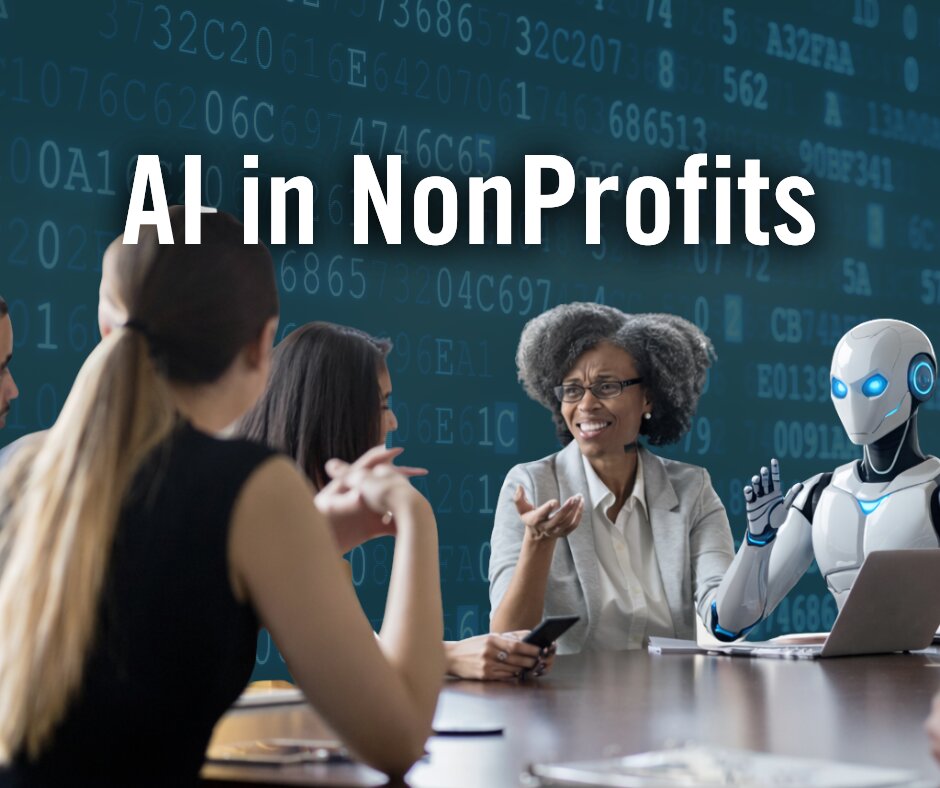
AI has arrived in NonProfit organizations quietly.
Not through board resolutions or formal strategies, but through staff. Someone uses it to draft a grant outline. Another uses it to summarize meeting notes. Someone else rewrites donor communications faster than before.
It doesn’t feel like a transformation. It feels like a shortcut.
And that’s exactly why NonProfit leaders need to pay attention now.
Most NonProfits haven’t made a formal decision to “adopt AI.” Yet AI is already being used across organizations, often informally and without shared guidance. Staff are experimenting with tools that promise speed, clarity, and relief from repetitive work. In resource-constrained environments, that appeal is understandable. AI feels like help.
The risk isn’t that people are using AI.
The risk is that they’re using it without guardrails, shared understanding, or leadership visibility. When new technology enters an organization quietly, leaders often lose insight before they realize there’s something to see.
Used thoughtfully, AI can be genuinely useful for NonProfits. It can reduce time spent on drafting and documentation, help staff organize ideas and information, support planning and analysis, and free people to focus more on mission-driven work. That potential is real and ignoring it entirely isn’t practical or helpful.
At the same time, AI introduces responsibilities many organizations haven’t fully considered. Questions around privacy, accuracy, accountability, and judgment come into play the moment AI tools touch real work.
That’s why the most important question isn’t, “Should we use AI?”
AI is already being used.
The more meaningful question is, “How do we want AI used in our organization?”
That’s a leadership question, not a technical one. It touches policy, ethics, privacy, accountability, and culture. Like any powerful tool, the value of AI depends entirely on how intentionally it’s introduced and governed.
AI systems generate outputs by predicting patterns from data. They don’t understand mission, nuance, or accountability. That creates situations leaders need to be mindful of: sensitive information shared unintentionally, drafts that sound confident but aren’t accurate, content that lacks appropriate context, or decisions influenced by outputs no one fully reviewed.
None of this requires panic. But it does require awareness.
Just because AI can generate something doesn’t mean it should be trusted without human judgment.
This is where many conversations about AI go wrong. AI isn’t a decision-maker. It’s an accelerator. It speeds up whatever already exists. Strong processes get faster. Weak processes get riskier. Clear oversight becomes more important, not less.
For NonProfits, that distinction matters deeply. Mission-driven work depends on judgment, empathy, and accountability (qualities AI does not possess). The goal isn’t automation for its own sake. The goal is supporting people, not sidelining them.
Strong NonProfit leaders don’t need to become AI experts. They do need to acknowledge that AI is already present, set expectations for how it should and shouldn’t be used, ensure sensitive information is protected, and make sure outputs are reviewed by people who understand context.
Most importantly, they need to ensure AI adoption aligns with the organization’s values, not just its workload.
That’s governance. Not technology.
This doesn’t require a complex strategy document. It starts with conversation, clarity, and intentional boundaries.
For many NonProfit leaders, the challenge isn’t deciding whether AI is “good” or “bad.” It’s understanding where it’s already being used, which risks actually matter, what guardrails make sense, and how AI fits into the broader technology picture.
Sometimes that reflection leads to small adjustments. Sometimes it leads to clearer policies. Sometimes it simply restores visibility where there was none.
All of those outcomes are valuable.
The organizations that benefit most from AI won’t be the ones that adopt it first, but the ones that adopt it thoughtfully, with clarity about responsibility, oversight, and risk.
If you’d like to talk about how AI fits into your organization’s technology environment and leadership responsibilities, a free discovery call can help you decide what makes sense for your mission.