



TL;DR
Donors give NonProfits access to extremely private and sensitive financial data. Protecting that trust requires stewardship, not good intentions. It means setting clear standards, maintaining consistent data practices, and regularly reviewing how donor information is stored, accessed, and protected.
For social service NonProfits, trust is the currency that fuels everything else. Programs, partnerships, grants, and donor relationships all depend on the belief that your organization will do the right thing, even when no one is watching.
Yet one area of trust is often taken for granted: donor data.
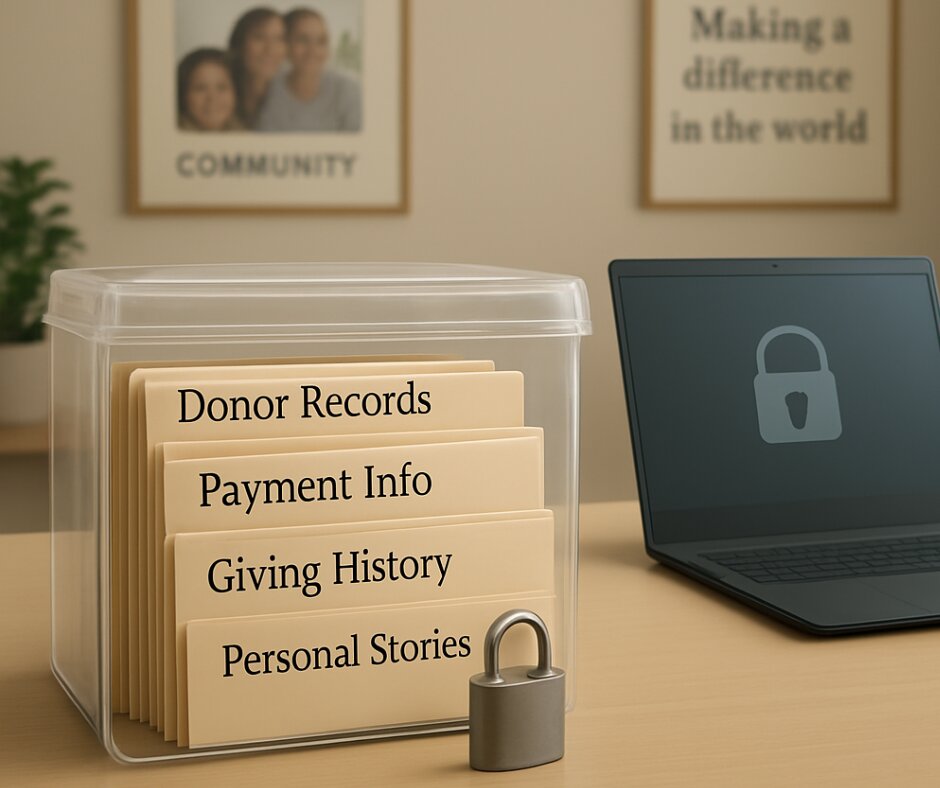
Donors routinely share sensitive personal and financial information—names, addresses, giving histories, payment details, employer data, and sometimes even personal stories. They do this because they believe your organization will protect it, use it responsibly, and never put it at unnecessary risk.
That trust is not automatic. And it is not permanent. It must be earned and maintained through stewardship, not assumptions.
The Problem With Assuming “We’re Probably Fine”
Many NonProfit leaders assume donor data is handled appropriately because:
- “Our CRM is reputable.”
- “We outsource IT.”
- “We’ve never had a breach.”
- “That’s not really my area.”
These assumptions are understandable—but dangerous.
Data risk doesn’t usually come from bad intentions. It comes from gaps: unclear policies, outdated systems, over-permissioned access, or a lack of regular review. Over time, these small cracks widen, often unnoticed, until something breaks.
From a governance perspective, assuming donor data is “covered” without verification is no different than assuming finances are accurate without an audit. Both represent fiduciary responsibilities.
Stewardship Is a Leadership Issue, Not a Technical One
Too often, donor data protection is framed as an IT problem. In reality, it’s a stewardship issue—and stewardship lives squarely with executive leadership and the board.
Stewardship means:
- Knowing where donor information lives
- Understanding who can access it and why
- Ensuring it’s protected in a way that matches its sensitivity
- Reviewing practices regularly as the organization grows and changes
This doesn’t require technical expertise. It requires oversight, curiosity, and accountability.
Boards don’t need to configure firewalls. Executive directors don’t need to manage backups. But leadership does need to ask the right questions and ensure clear answers exist.
Why Donor Trust Is Different From Other Data
Donor data isn’t just another operational asset. It’s relational.
When a donor gives, they are saying: “I trust you—not just with my money, but with my identity and my values.”
A breach or misuse of donor data doesn’t just create operational disruption. It creates reputational damage that can linger for years. Donors may forgive mistakes in programming or messaging. They are far less forgiving when their personal information is mishandled.
In an era where data privacy concerns are front-page news, silence or complacency can be interpreted as negligence—even when no incident has occurred.
The Role of Clear Standards
Strong stewardship starts with clarity.
Every NonProfit that handles donor data should be able to articulate, at a high level:
- What donor information is collected
- Where it is stored
- Who has access to it
- How access is granted and removed
- How long data is retained
- How it is protected
- What happens if something goes wrong
These don’t need to be long or overly technical documents. In fact, the most effective standards are often simple, written in plain language, and reviewed annually.
When standards are clear, consistency follows. When consistency exists, risk decreases.
Consistent Practices Beat Good Intentions
Many NonProfits rely on institutional knowledge: “Jane knows how that works,” or “We’ve always done it this way.” That’s fine until Jane leaves, systems change, or a new tool is added.
Consistent practices ensure that donor data is handled appropriately regardless of who is on staff or which vendor is involved. This includes:
- Standardized onboarding and offboarding processes
- Defined permission levels for donor systems
- Regular password and access reviews
- Clear procedures for exporting or sharing donor information
- Guidelines for using donor data in reports, marketing, or grant submissions
Consistency reduces reliance on heroics and memory. It replaces assumptions with process.
The Importance of Regular Review
NonProfits evolve. Staff changes. Programs expand. Technology stacks grow organically over time.
What worked three years ago may no longer be appropriate today.
That’s why stewardship requires regular review—not just after a problem occurs.
A periodic review helps leadership answer questions like:
- Do we still need all the systems that touch donor data?
- Are there duplicate or outdated platforms?
- Do former staff or vendors still have access?
- Have our risks increased as we’ve grown?
This isn’t about finding fault. It’s about aligning current reality with current responsibility.
Reframing the Problem: From Fear to Responsibility
It’s tempting to approach donor data protection through fear—breaches, fines, headlines. But fear-based thinking often leads to avoidance.
A healthier, more sustainable frame is responsibility.
Protecting donor information is an extension of your mission. It reflects respect for the people who make your work possible. It signals professionalism, maturity, and care.
When leadership treats data stewardship as part of long-term organizational health—not just risk avoidance—it becomes easier to prioritize, resource, and discuss at the board level.
What Executive Directors and Boards Can Do Now
You don’t need to overhaul everything tomorrow. Start with awareness and alignment:
- Schedule a high-level review of donor data practices
- Ask for plain-language explanations, not technical jargon
- Document what you learn
- Identify gaps, not to assign blame, but to improve stewardship
- Commit to periodic review as part of governance
These steps send a powerful message internally and externally: donor trust matters here.
Trust Is Built in the Quiet Decisions
Donor trust isn’t earned through marketing language or annual reports alone. It’s built quietly, through everyday decisions about systems, access, oversight, and accountability.
Good intentions are not enough.
What protects trust over time is thoughtful, consistent, and regularly reviewed stewardship.
For NonProfits that care about lasting impact, that trust is too important to leave to chance or assumption.
If you’re wondering whether your current systems truly reflect the level of trust donors place in your organization, a short discovery call can help bring that into focus. It’s not a sales pitch or a technical deep dive—just a plain-language conversation to confirm what’s working, surface what may not be, and give you confidence in the assumptions you’re making. If that would be helpful, you can learn more or schedule a brief call here: https://www.i-mtechnology.com/discoverycall/